

TL;DR: Ultralight cams mainly save weight by replacing steel cables with Dyneema, while otherwise functioning very similarly to standard C4s. The main downside is that the changed stem and head shape can make smaller sizes (.4–.5) harder to place in tight or constricted cracks. The larger sizes (#1 and up) benefit most from the weight savings and are much less affected by these placement issues. A full double rack can save roughly a pound compared to standard C4s, which is meaningful for big trad or desert objectives. However, durability is a concern since Dyneema is unlikely to last as long as steel cable. Overall, they make the most sense as a hybrid approach—use Ultralights in the larger sizes, stick with standard C4s in the smaller ones, and pair with stoppers for a well-rounded trad rack.
When it comes to climbing the maxim light is right tends to guide people’s purchasing decisions. So when BD came out with the Ultralight cams a few years ago I figured eventually my rack would be composed of them entirely in a few years. While the Ultralight Cams are still worth it I think they’re more of a niche item than I had originally anticipated.
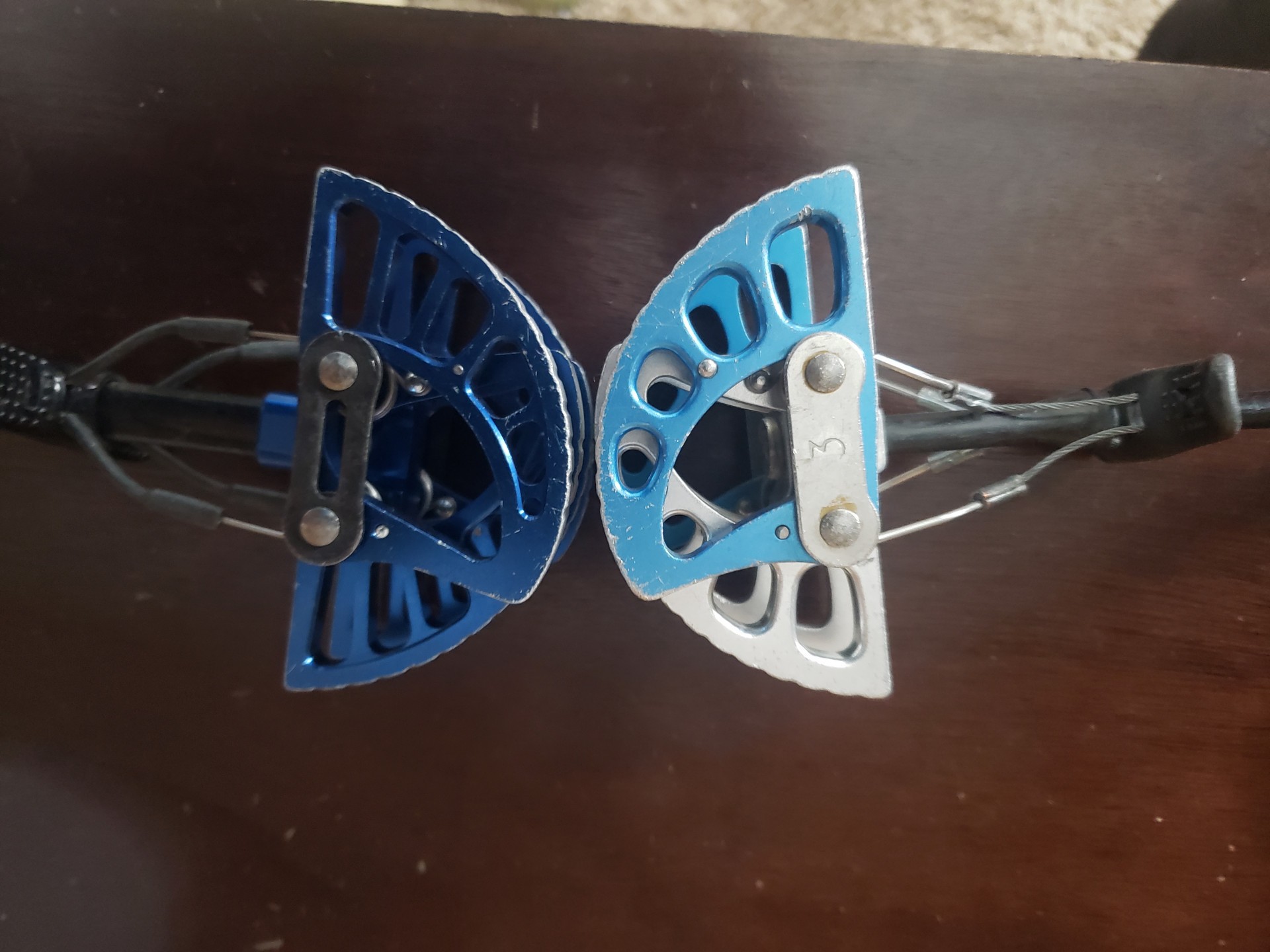
#3 Ultralight next to last generation C4
Construction
The big difference here is that the stems and thumb loop are composed of a dyneema cord rather than a steel cable to save on weight. This has been applied to the sling as well. The cutouts on the cam lobes themselves are a little bit bigger as well. Aside from these somewhat minor differences nothing has really changed. Sizes all match previous C4’s and they function the same (minus the .3). The biggest difference is weight but there are some minor differences I’ll get into below.
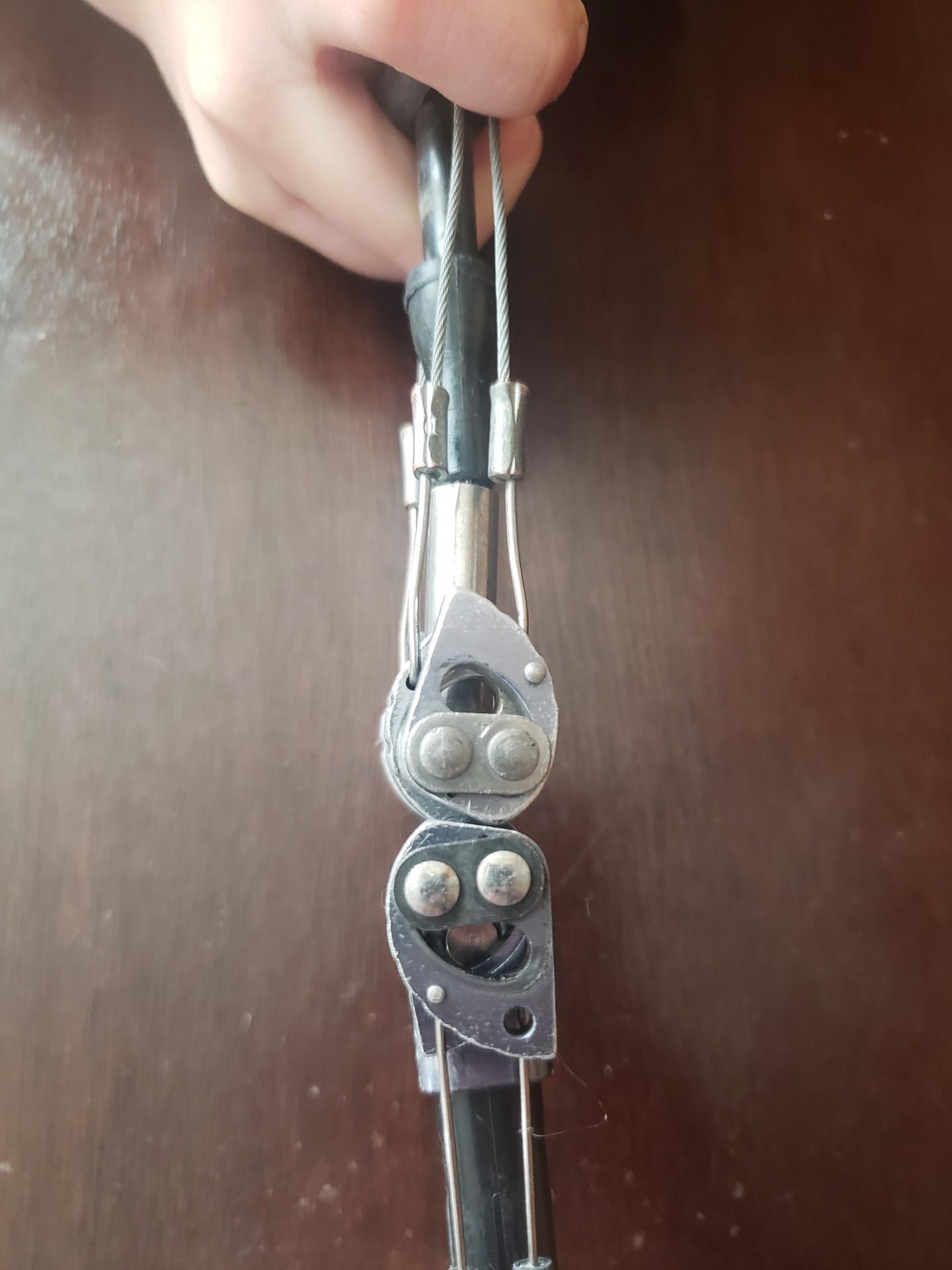
Ultralight vs. Regular .4
Sizes and Shapes
While most of the changes seem minor there are some changes to the size and shape of the stem that I think affect where they’ll be most useful.
When you take a close look at the stems what you’ll notice is that the part where the stem enters the head comes down a little more. The stem is also a bit wider in the same axis as the lobes. What this means is that when placed deeper in a pod that opens up the stem may be too wide to get past constrictions near the front of a crack making it impossible to slide the cam down into a constriction for optimal placement. I’ve noticed this most often with the smaller sizes. In these smaller sizes where the stem meets the head is almost as big as the smallest range of the cam itself. Most obviously this limits placement options with the .4 and .5 sizes.
Best Uses and Sizes
Because of the issues with the stem and head size I would recommend using the bigger sizes. In the #1 and bigger sizes this is where you’ll be less affected by the size of the stem as well as gain the most weight savings.
A double rack of standard C4 cams from .4-4 as advertised weighs almost 4.5 lbs (69.1 oz) while the same rack of ultralights would be a little under 4 lbs (59.46 oz). For an Indian Creek rack where you may be carrying a dozen of the same size this difference may be more prominent and the head size issue may be less of a concern so if you’ve got a project and saving a pound or two will get you there then you might think it worth kitting yourself with a bunch of these.
The general weight savings is the only real reason I’ve seen to get these. While they’ve not been on the market long enough to really know their longevity it’s obvious that steel cable will outlast the dyneema material.
Final Thoughts
These aren’t a niche item like the Z4’s or the Offsets but they are a little bit specialized. I say start transitioning those bigger sizes to the Ultralights but I’d stick with the standard C4’s in the smaller sizes. A double rack paired with a set of regular Stoppers and you’ll be able to go for it on the majority of trad climbs.
Conclusion
Overall, Ultralight cams make the most sense as a targeted upgrade rather than a full replacement for standard C4s. The weight savings are real and can add up meaningfully on big trad or desert racks, but the design compromises, especially in the smaller sizes, limiting their versatility in tighter placements. For most climbers, a mixed rack is the sweet spot: use Ultralights in the larger sizes where they shine, and rely on standard C4s for the smaller end of the range where precision matters more.
Are Black Diamond Ultralight cams better than standard C4 cams?
They’re lighter, but not strictly better. They function similarly, but the tradeoff is reduced durability and some placement limitations, especially in smaller sizes.
Which sizes of Ultralight cams work best?
The larger sizes (#1 and up) are the most effective, since they provide the biggest weight savings without the same placement issues seen in smaller cams.
Should I replace my whole rack with Ultralight cams?
Not necessarily. Most climbers are better off using a hybrid rack with ultralights for larger sizes and standard C4s for smaller sizes where placement precision matters more.
Related posts
Keep reading with connected field notes, trip reports, and climbing tips from the guide team.


